
Cameron Crowe’s “Elizabethtown” (2005) is about an idealistic young man dealing with a catastrophic business failure, a lavish bomb that hurts his credibility and standing amongst his peers.
In the movie, Orlando Bloom plays the character in question, the creator of a much hyped and poorly-received shoe that results in a nearly $1 billion loss.
In real life, a dissimilar but still ironic loss faced Crowe, whose film broke a box office, audience and film critics winning streak.
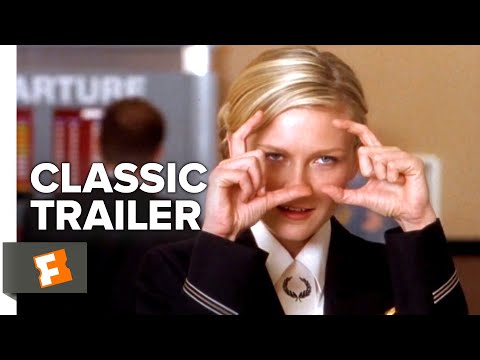
While “Elizabethtown” was said to have been shortened and re-cut after a famously disastrous premiere at the Toronto Film Festival, it was met with scorn by film journalists and a mostly dismissive response from audiences.
I suspect some of the negative reaction came from movie buffs who were still angry over Crowe’s off-putting but bold, occasionally brilliant “Vanilla Sky” (2001) becoming a sizable hit. Or, audiences simply were tired of the cheery, celebratory nature of Crowe’s films, one of which famously made “Show Me the Money!” the ubiquitous catch phrase of the late 20th century.
Decades removed from its release and being branded a flop, “Elizabethtown” deserves another look. In fact, for those scrambling to find a fresh idea for a Valentine’s Day date movie, here’s a romantic fantasy that celebrates life’s possibilities and the process of recouping after a failure.
Bloom’s Drew Baylor is introduced on his last day of work, meeting with his boss (a hilariously droll Alec Baldwin) informing him of the epic size of the company’s financial loss. The bad news continues, as Drew heads off to Kentucky upon learning his father passed away.
On the red eye flight to Louisville (which the film helpfully informs us is pronounced “lull-ville”), Drew meets Claire, played by Kirsten Dunst. Claire is chipper, to say the least, a refreshingly optimistic, upbeat presence whom Drew is initially put off by.
To the credit of the movie and Dunst’s enchanting performance, we’re also unsure of Claire at first. The character and Dunst’s take on her is both perfectly charming and a bit too much. It takes Drew, as well as the audience, some time to see just how much they need one another, as their courtship proceeds in ways that are quirky but not inevitable.
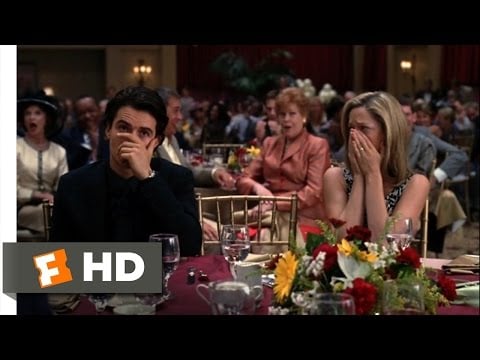
Crowe’s film is overwritten and persistently cute but still hearty, funny and really wonderful. The central love story clicks. So do tasty narrative side notes portraying “Chuck and Cindy: The Wedding” and a VHS tape with the power of taming the unruliest of children.
There’s also a sequence, half-told through montage, where we see what a great, long-into-the-night phone call between two people falling in love looks like. Anyone who has experienced the pleasure of being on one end of such a call (like I have) will connect to the emotions Crowe is going for in this wonderful set piece.
The screenplay and dialogue seem cobbled together from little ideas, memorable choices of words and individuals of great character Crowe must have encountered over the years. Some of the time, you can hear Crowe trying too hard but, in many instances, there is a true beauty in the dialogue.
It might sound like I’m letting this critically savaged film entirely off the hook, but I’m not. There is a late-in-the-movie set piece involving the funeral of Drew’s father. It features Susan Sarandon as Drew’s mother; her character and scenes should and could have been cut out of the movie.
I love Sarandon but her big scene, in which her eulogy for her late husband becomes performance art, a stand-up routine and a tap dance, is a disaster. The slapstick that caps this sequence is another poor choice.
The next time I watch this, I’m going to skip from Drew and Claire’s encounter in front of the hotel, past the funeral, and right into the climactic road trip.
About this road trip: it is wildly improbable and, if you think about how fast Claire puts it together for Drew, totally unbelievable. Still, everything in this movie is romanticized and larger than life. To put it in musical terms, “Elizabethtown” is more a glorious rock ballad from Lynyrd Skynyrd than a down-to-the-dirt Tom Waits tune.
I went with it and found it moving all the same.
“Elizabethtown” isn’t Crowe’s masterpiece, but he clearly wanted it to be. Bloom isn’t right for the role of Drew, a part Crowe had difficulty casting. He should have re-teamed with Tom Cruise a third time, since the role was so obviously written for him.
Still, Bloom doesn’t embarrass himself and he and Dunst reveal the inner life beneath the exteriors of their pleasant but guarded characters.
Crowe, like Drew, rebounded from this unsuccessful undertaking. As in “Jerry Maguire” (1996), still his best movie, Crowe loves his characters, which is a terrific quality in a screenwriter. Even more so than “Almost Famous” (2000), this is Crowe’s unabashed ode to love, music and the heartland, making for a truly American film.
For the true romantic and any lover of great American pop tunes, here’s a potent cinematic mix tape.
The post Consider ‘Elizabethtown’ as a Valentine’s Day Treat appeared first on Hollywood in Toto.